Should You Trust TikTok’s DIY Car Repairs?

TikTok has quickly evolved from a platform for dance challenges and viral memes into a hub for all kinds of DIY content. Among its many niches, #CarTok has carved out a space where creators share quick fixes and “life hacks” for car owners. These videos are often short, catchy, and convincing.
For viewers, the appeal is obvious: why spend thousands at a repair shop when you can solve the problem at home with everyday household items?
However, AutoTrader’s analysis found that “car repair” searches soar to about 365,000 every month and that nearly 90% of TikTok’s trending hacks are more trouble than they’re worth. In other words, while these videos rack up millions of views, most of them should come with a warning label.
With that in mind, let’s take a closer look at some of the most popular TikTok car hacks that often do more harm than good:
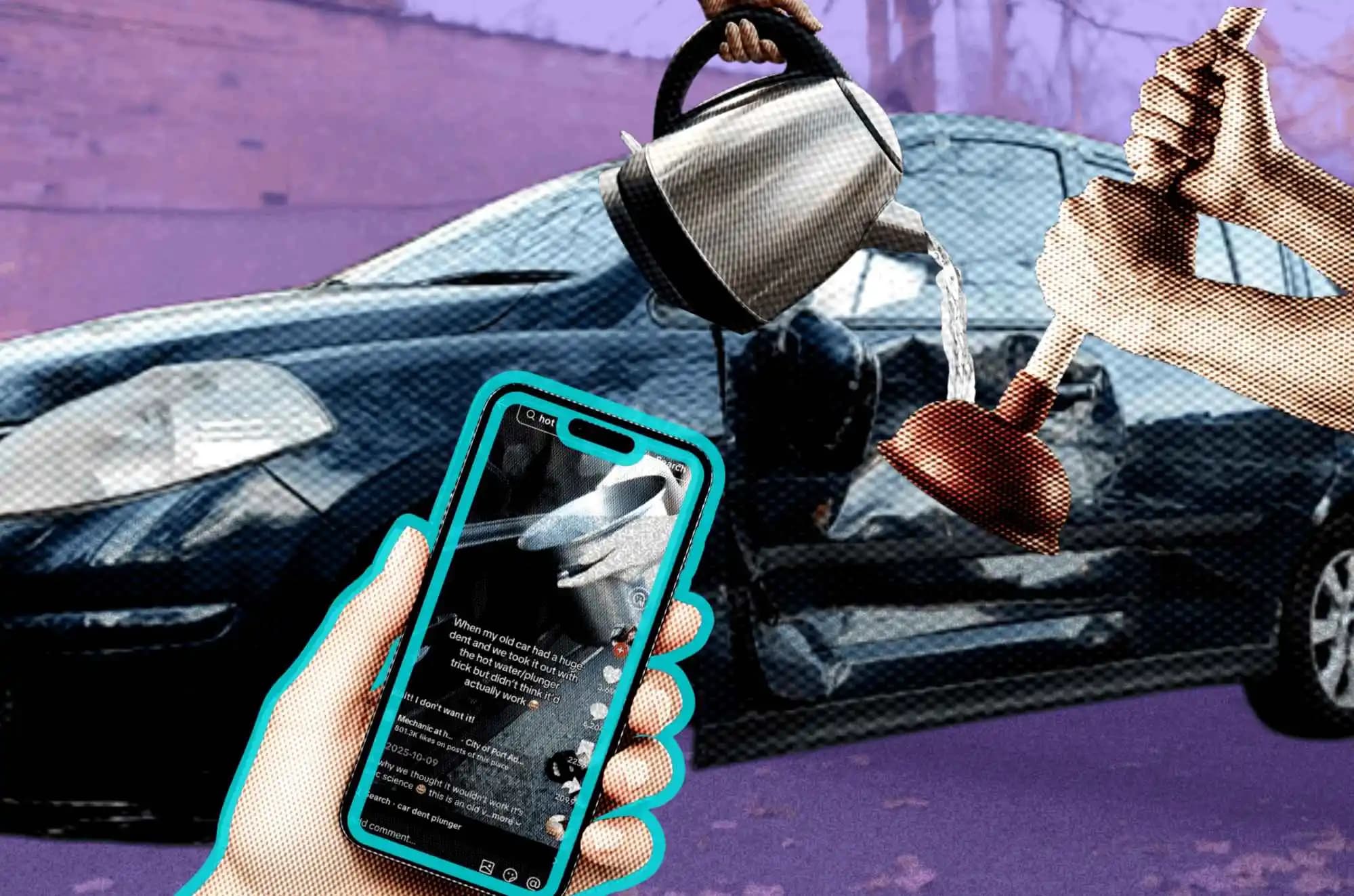
1. Dent Removal with Hot Water and Plungers/Glue Sticks
The “Hack”:
📌 https://www.tiktok.com/@pubity/video/6840364283084246278
The Risk:
This can distort the metal further, leading to more costly repairs. The boiling water can burn skin, damage paint, and interfere with bumper-mounted safety sensors.
2. Toothpaste for Car Scratches
The “Hack”:
📌 https://www.tiktok.com/@xiaozhujiadao66/video/7244406118770855211
The Risk:
Toothpaste contains abrasives like silica and chalk designed specifically for cleaning human enamel, which is chemically and physically different from modern automotive paint. While it might look like a fix initially, according to automotive experts at Ceramic Pro, these ingredients lack the specific lubricants found in car polishes, which can lead to permanent hazy patches and micro-abrasions on your vehicle’s clear coat.
3. Coconut Oil and Vinegar for Scratch Removal
The “Hack”:
📌 https://www.tiktok.com/@jonahietto/video/7278144703881661698
The Risk:
This coconut oil and vinegar hack does not repair scratches; coconut oil only temporarily masks them by filling in surface imperfections, making them less visible for a short period. Once it wears off, the scratch reappears unchanged.
Vinegar is highly acidic (around pH 2) and is not designed for automotive paint. Its acidity can break down protective wax layers, weaken the clear coat, and, in some cases, contribute to paint dulling or surface damage over time.
4. Potato for Car Glass Cleaning
The “Hack”:
📌 https://www.tiktok.com/@carknowledge_/video/7468618820098313503
The Risk:
According to car expert Robert Webster of My Car Glass, in an interview with Daily Express UK, using potatoes on glass leaves a starchy residue that creates dangerous smears and blurry vision in direct sunlight or nighttime glare.
This organic film is far less effective and significantly more dangerous than professional hydrophobic treatments, which are specifically engineered to maintain optical clarity.
No Such Thing as a “One-Size-Fits-All” Hack
Beyond these household hacks, another reason TikTok tricks often backfire is the complexity of modern car surfaces. Today’s vehicles use multi-layered paint systems, including a base coat for color and a clear coat that serves as the main protective layer.
This clear coat is designed to resist UV exposure, chemicals, and everyday wear—but it can also be damaged by abrasive or acidic substances not made for automotive use.
Even within the same make and model, finishes can vary depending on materials and coatings. Because of this, a “one-size-fits-all” hack from TikTok can easily compromise protective layers instead of fixing the problem, leading to further surface damage over time.
Not All Hacks Are to Be Followed
DIY car care can truly help you save money. Simple tasks such as changing a flat tire, replacing windshield wipers, changing oil, or swapping out air filters are safe, practical, and cost-effective. These are the kinds of jobs that make sense to do yourself.
But once you move beyond the basics, the risks grow quickly. A single mistake—whether installing the wrong part, damaging another component, relying on unsafe or improper internet car repair hacks, or skipping an essential calibration—can quickly turn what should have been savings into a much larger expense.
In short, DIY is smart when you stick to straightforward repairs. For more complex issues, it is often wiser to rely on professionals. Investing in professional service today can save you from far costlier mistakes tomorrow.